Modern Pasta Carbonara
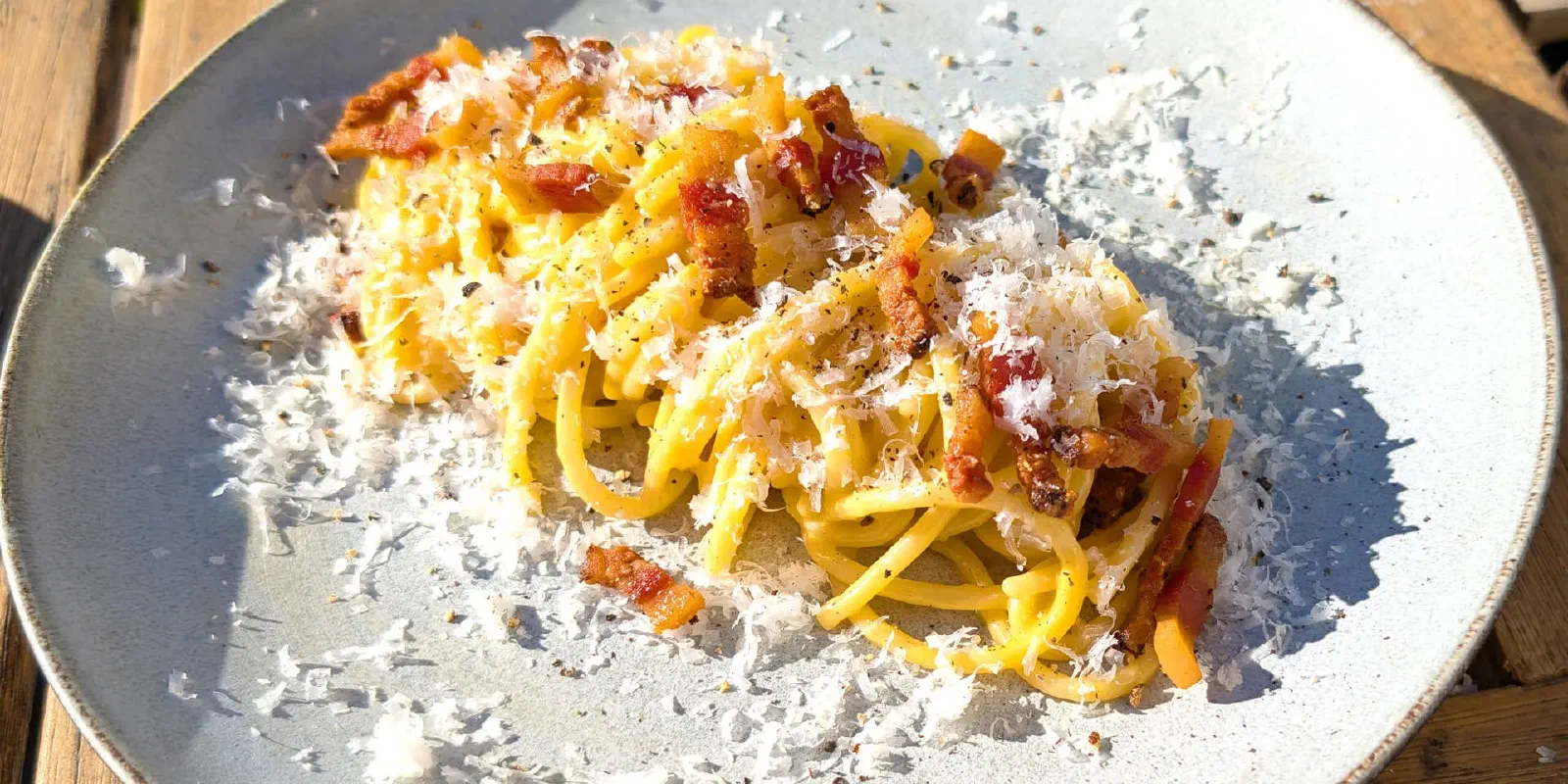
Method
Tap step to focusDice the asparagus into tiny pieces (0.5cm each). Do not use the tips, save thosse for a different recipe. Cut the guanciale into bite sized cubes.
In a bowl, mix the egg and egg yolks, and slowly add the grated parmesan until it forms a semi-liquid paste.
Boil salted water and cook the pasta al dente.
Fry the guanciale over medium-high heat in a dry pan until the fat renders out, then add the asparagus and lots of pepper. Fry until the asparagus is cooked and guanciale is crispy.
Drain the pasta, but keep 1 glass of pasta water aside.
Mix the pasta with the guanciale and asparagus in the pan (off the heat or very low heat).
Slowly whisk a few tablespoons of pasta water into the bowl with egg-parmesan mixture to temper it into a smooth sauce. Season with some more black pepper.
Off the heat entirely, pour the egg mixture into the pasta and toss vigorously until it becomes a creamy and thick sauce. Add more pasta water if it’s too thick.
Serve immediately with extra cheese and freshly ground pepper.
Notes
- • By Rune
- • This one takes practice to get right, especially the sauce consistency.
- • Fun fact 1: The recipe is rumored to have 2 origins, but surrounding the “Coal” theme. (Coal = Carbone in Italian). First: The pasta was considered a nice, hearty meal for the coal-mine workers back in the day. Second: The pasta has copious amounts of black pepper in the recipe, giving it a black tint, the tint of coal
- • Fun fact 2: The recipe first came to prominence when the US liberated Italy during World War 2. The soldiers brought Bacon & egg yolk powder for the population as rations. Adding these ingredients to a more traditional “Cacio e pepe” and you get a Carbonara. The Carbonara from this recipe is also a modern version of the older bacon & egg yolk version. This modern version is however seen as the standard nowadays.