Ragù Bolognese
Method
Tap step to focusFinely dice the onion, cut the celery and carrot in to small cubes, roughly 2-3mm each.
Preheat your oven to 140 degrees celsius.
Add some olive oil in to a large pan (that can be placed in the oven, preferably a cast-iron dutch oven) and add your onions, celery and carrot.
Fruit the vegetables on low to medium low temp, until soft and sweet.
Remove vegetables from the pan, and wipe the pan clean with a paper towel.
Up the heat to medium-high, and add the guanciale cubes. Fry the cubes in their own fat, until crispy. Season with freshly ground black pepper. Remove the guanciale cubes from the pan and rest on a plate with a paper towel. Leave the fat in the pan.
Add the minced meat to the pan. Season with salt and pepper.
Let the bottom crisp up before braking apart. Once crispy on the bottom side, break up the minced and crisp up the other sides.
Once the minced meat is crispy and caramelized, add the vegetables and guanciale back in to the pan.
Add the full bottle of wine to the pan, and reduce the liquid by 80-90%. When this is done, the alcohol should have evaporated. (see notes as to why we reduce by so much)
Reduce heat to medium. Add in the tomato puree and cook for 1-2 minutes.
Then add peeled tomatoes, 2 stock cubes and water. Bring it to a boil.
Cut your sheet of parchment paper in to a cartouche, slightly larger than your pan. Click for cartouche example

Once the liquid is up to a boil, place a cartouche over the top and put the pan in the oven.
Reducing the liquid can take up to 24 hours, depending on the amount of liquid in your pan, water content of the tomatoes, your oven, etc.
If you plan to leave the pan in the oven overnight, reduce the temperature so the liquid doesn’t evaporate too quickly and you end up burning the bottom of the pan.
Check the pan every 1-2 hours to check on the liquid levels and stir if necessary.
When the liquid has reduced, that all is left is a thick sauce, remove the pan from the oven.
Now to finish: Taste the sauce, Add salt/ pepper to taste if it is acidic, add 250ml of milk to the pan If it is still acidic after adding the milk, add 1 tbsp of sugar. If it is still acidic after adding 1 tbsp of sugar, add 1 more.
Your sauce should now be done. You can store by freezing for up to 2-3 months. But the sauce will be even better if you let it rest. Can be served from the pan up to 2-3 days later.
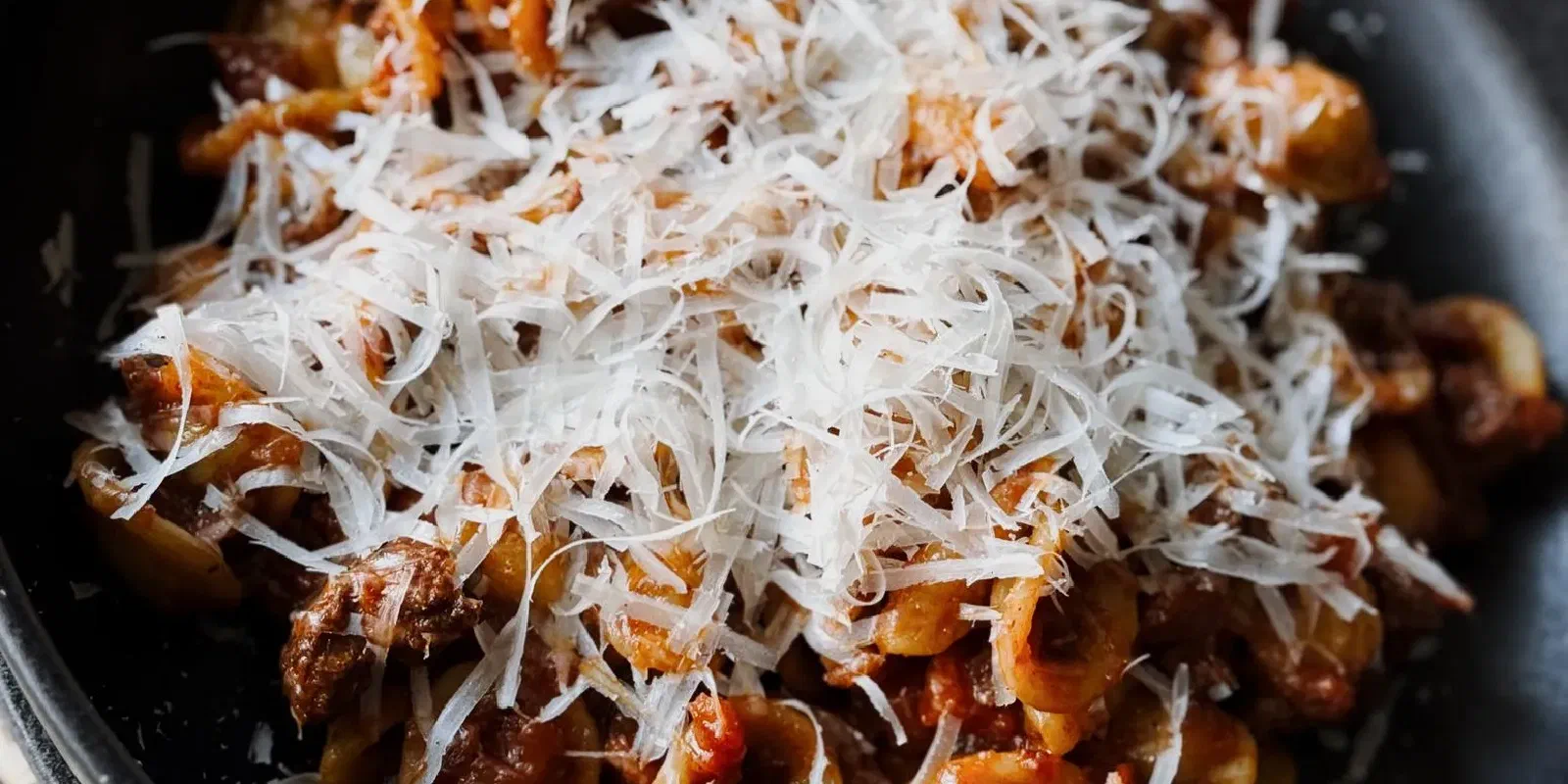
To make a meal, simply cook some pasta up until 1 minute before al dente (read notes as to why). Drain 90% of the pasta water, keep the other 10% with the pasta. Add sauce over the pasta in the pasta pan, finish cooking the pasta in the sauce. Serve with freshly grated parmesan (and some shredded basil if you want to)
Notes
- • Wine recommendation: notes of dark fruit, low acidity & tannins
- • If you reduce the wine by only 50%, the end product will be more acidic. So despite the alcohol cooking off much sooner, it is still good to take it as far as reducing by 80-90%.
- • If you add the sauce after fully cooking the pasta, the pasta will not absorb the sauce. This will lead to: 1. the dish being less flavorful, 2. the sauce not binding to the pasta (slide off it).
- • Also if you overcook pasta (past al dente), then your body will break down the carbs in the pasta much quicker, leading to a sugar spike. To prevent this (and an energy crash) cook your pasta al dente so your body takes more time to break down the carbs. Your energy levels will be much more stable and you feel fulfilled for a longer period. (Health & diet benefits!)
- • If you go full science on it, Al dente pasta scores better than brown rice, whereas overcooked pasta scores as poorly as white bread in terms of sugar spike
- •
 By Rune